

Key features of Rubis Emergency
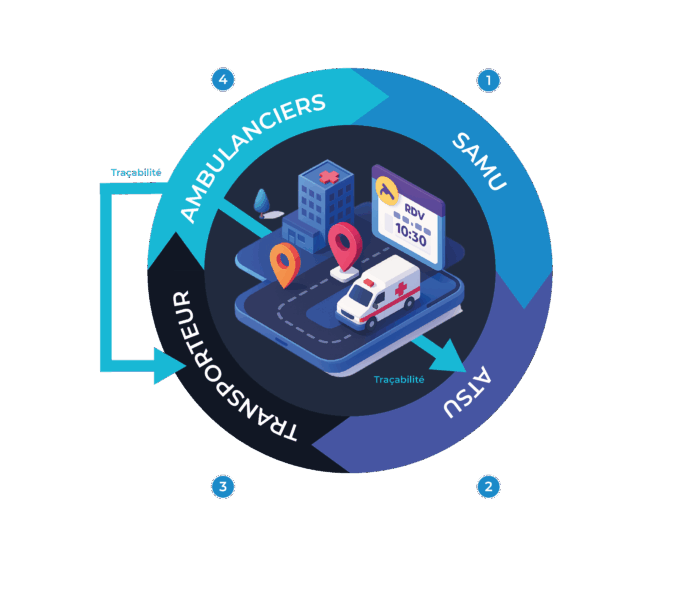
Interface with the SAMU
Automatic mission sending without re-entry, with immediate feedback on tracking and vehicle position. Fewer transmission errors, more fluid coordination between dispatch and field.
Advanced routing algorithms
Dozens of configurable rules (task rotation, geolocation, availability, constraints) to assign each mission to the right transporter. Faster and more relevant decisions.
Real-time tracking
Visualization of ongoing missions, their status and history of actions performed. You maintain a clear view of progress and timestamped traceability.
Dynamic mapping
Live display of intervention locations and positions of engaged vehicles. Instant reading of the situation for better coordination and improved visibility.
Alert and shift management
Integrated shift roster and automatic alerts (delays, missing transporter, deviations). Secure service continuity with enhanced vigilance.
Mobile app for ambulance drivers
Mission receipt and tracking on smartphone, with all necessary information for intervention. Fewer calls, fewer oversights, more autonomous execution.

Rubis Emergency SaaS Offer
Simple, secure access with no hardware constraints
Access Rubis Emergency from any internet-connected workstation while benefiting from a high level of security (ISO 27001 and HDS certifications).
Clear pricing and continuous support
Enjoy the full software experience without additional modules to unlock. Unlimited 24/7 hotline, automatic data backup and updates included.
Operating diagram
Advantages of Rubis Emergency
Connection to a secure dedicated site
Access via a secure and dedicated environment with high requirements for health data. ISO 27001 and HDS certifications to guarantee daily compliant usage.
Available search algorithms
Choose the most suitable algorithm based on context (emergency, availability, sector, assignment rules). Accelerate decision-making and make engagement more effective.
Mapping with real-time vehicle tracking
Visualize live the position of engaged vehicles and mission status. Gain in coordination, anticipate delays and improve supervision of interventions.
Management of shift rosters and ambulance shortages
Centralized piloting of shifts, alerts and transporter availability, with clear management of shortage periods. A more robust organization to secure service continuity.
Rubis Emergency in a few figures
Rubis Emergency News
Why Outsource Your IT Services? The 3 Major Benefits of Partnering with a Service Provider!
In a world where technology is constantly evolving, managing IT services is a daily challenge for companies, regardless of their size or industry. Aware of the difficulties faced by professionals, IT…
Lire la suite
Medical couriers: Why choose to outsource or digitize mail services?
The digitization of mail has become a real challenge for healthcare transport providers. Administrative management is essential to ensure efficient and reliable service. However, handling mail—whethe…
Lire la suite
Summer Closure of Your Business: Why Should You Implement a Data Backup Plan?
As the summer period approaches, many companies prepare for temporary closure, offering their employees a well-deserved break. However, this period can also present significant risks to the security …
Lire la suite